

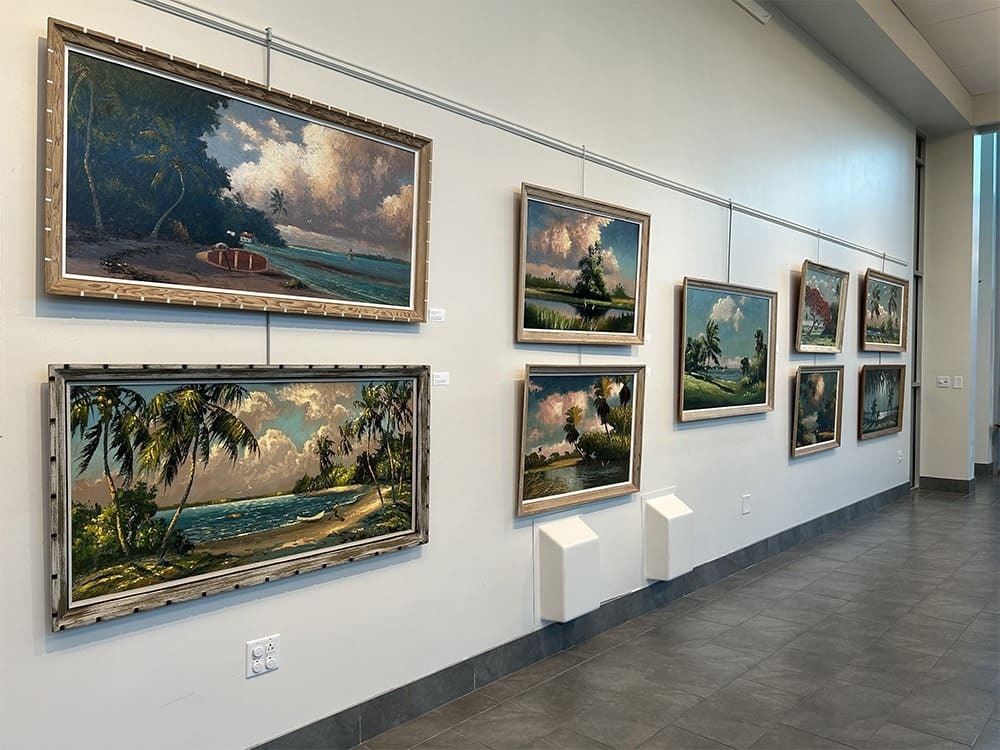
Beyond Canvas Understanding the Painting Surfaces Used by the Florida Highwaymen
A Florida Highwaymen painting begins with more than the scene on its front. Beneath the palms, clouds, and water is a support: the physical surface that carries the paint. Understanding that surface adds another dimension to collecting, especially when paintings on board and canvas appear together.
The Highwaymen used accessible materials to build independent careers as artists. Their choices were practical, but the finished works deserve attention as paintings, not simply as examples of inexpensive supplies. When exploring Florida Highwaymen art, look at both the image and the object that makes it possible.
What Is a Painting Support
A support is different from the paint layer. Canvas is a woven fabric, usually stretched over a wooden structure. Board is a rigid panel. Both can carry oil paint, but they give the finished object different physical characteristics.
This distinction helps collectors describe a work accurately. Calling every painting a canvas may seem harmless, yet it overlooks an important part of its construction. A listing that identifies oil on board tells you something different from one that identifies oil on canvas. Reading the medium line in a catalog or sales description is a simple habit that can sharpen your understanding before you begin comparing the painted scenes.
Why Upson Board Matters
Upson board appears frequently in discussions of Highwaymen materials. The Florida Department of State identifies it among the surfaces used by the artists. It offered an accessible alternative to conventional stretched canvas, fitting a working approach built around making paintings and bringing them directly to buyers.
Its presence connects the artwork to the artists’ resourcefulness. However, a material name should not overshadow the painting itself. A modest support can carry a compelling composition, expressive marks, and a carefully developed sense of space. The artistic achievement remains visible on the front.
The Highwaymen Also Painted on Other Surfaces
There was no single support used by every artist throughout an entire career. The U.S. Department of State’s profile of Willie Daniels describes his use of Upson board followed by Masonite, wood, and canvas. Its illustrated works include both oil on canvas and oil on Masonite.
That documented variety gives collectors a useful reminder: a Highwaymen painting need not match one familiar material formula. Reviewing Highwaymen paintings for sale can be an opportunity to compare how individual objects are described, alongside differences in subject and composition.
How to Look Beyond the Front
Begin with the description supplied by the owner or seller. Does it name the support specifically, or simply say board? If photographs of the reverse are available, consider them alongside the front image. Ask whether the material identification is documented or an informed description.
Do not remove backing or dismantle a frame merely to satisfy curiosity. Request existing photographs first. Record what is actually visible and keep uncertain identifications labeled as uncertain. A rear view may show labels or writing, but the photograph alone may not settle every question about construction.
A Better Vocabulary for Collecting
Learning these terms makes conversations more precise. Instead of asking only whether a painting is on canvas, ask what support was used and how that description was established. Keep that information with the artwork’s dimensions, photographs, and purchase records.
Material knowledge complements a close look at the painting; it does not identify an artist or establish a date by itself. Learn about Highwaymen Art Specialists and its focus on the artists and their work. For questions about a painting, you own or are considering, contact Highwaymen Art Specialists to discuss the available information.
